
Man, if I had a crystal ball back in 2013… I never would have signed that paper. Not in a million years. I still remember the day clearly—February 8, 2013. I was sitting in my cramped little apartment in Germany, staring at the contract from Valve, thinking I'd just landed the deal of a lifetime. A real, official Counter-Strike map, bought directly by Valve. Back then, Mirage was my baby, but it was just a custom map, a passion project, nothing more. I figured, why not? Cash in, move on. But here we are, 13 years later, and that decision still haunts me more than any defuse-kit-less 1v5 clutch.
Fast forward to now—2026. I’m still in the level design game, but every time I boot up CS2 and spawn onto Mirage, my heart does this weird little tug-of-war. Pride on one side, a dull ache on the other. See, Valve didn’t just buy a map from me. They bought a piece of my soul, and then slowly, methodically, they started reshaping it into something I barely recognize.
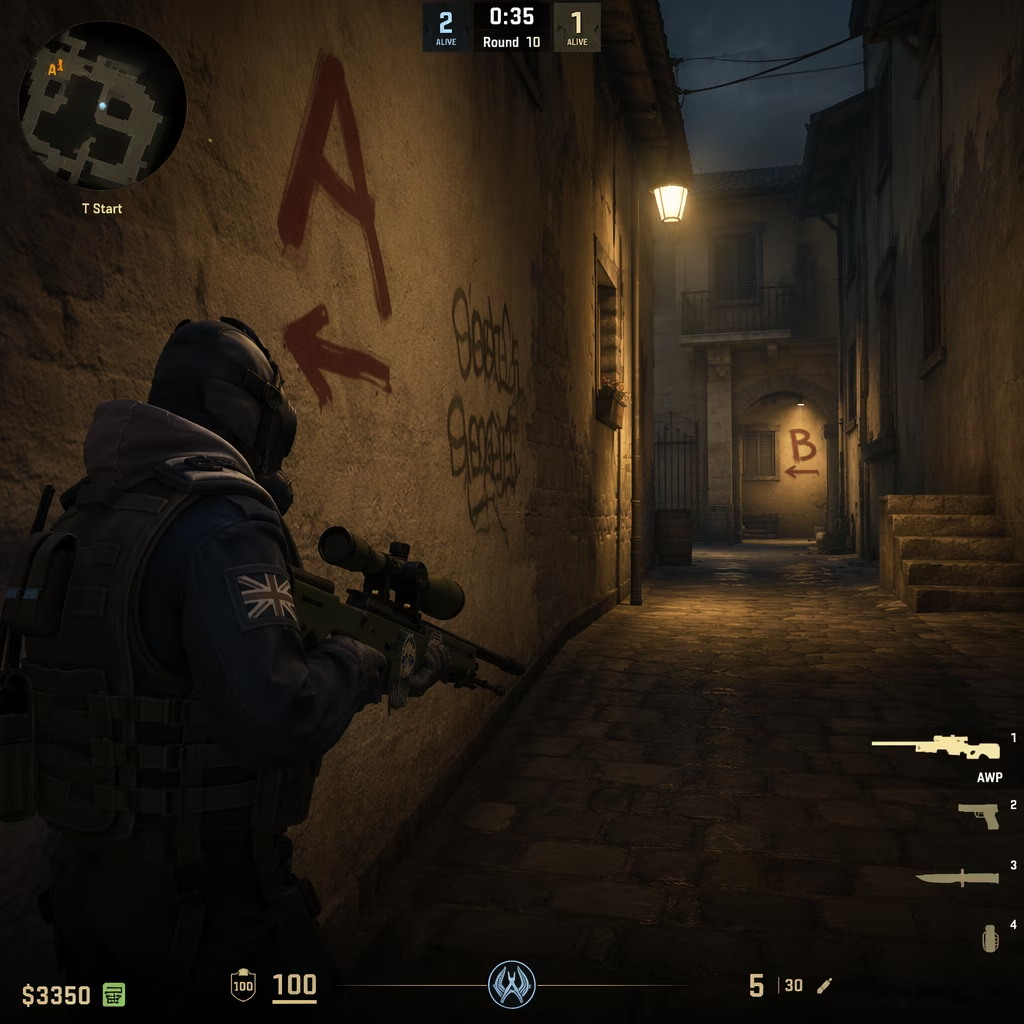
Don't get me wrong—Mirage is still Mirage. The bones are there. T-spawn, mid, apartments, palace, the whole layout you all know by heart. But the flow? The identity? That’s where my jaw clenches. Over the years, Valve's reworks have sanded off so many of the rough edges that gave the map its character. The A site especially. If you ever played the 1.6 version—my version—you'd know what I mean. The angles felt deliberate, risky, like they rewarded deep map knowledge and a little bit of insanity. Now? It's been smoothed into a safe, competitive shell. They call it balance. I call it... well, let’s just say I’ve muttered some colorful German words at my monitor.
And the mid changes? Oh, don't even get me started. That window boost, the bench adjustments, the way the sightlines got clipped. It’s like watching someone repaint your childhood home in sterile beige. I designed mid to be a chaotic nerve center, a place where smart, unpredictable plays could flip a round on its head. Today’s version still has that spirit, but it’s wearing a tailored suit when it should be in a battered hoodie.
But here's the kicker: it’s not even about the money. Valve made a very good deal—I won’t deny that. They were fair. And look, I work, I’ve got a stable life; money isn’t what keeps me up at night. It's the honor and the pride. Knowing that map could have lived on exactly as I envisioned, a testament to what community creators can do, if only I’d held onto it. Instead, I gave it away, and now I have to watch its name be attached to something that isn't fully mine anymore.
Sometimes I scroll through Twitter and see clips of insane clutches on Mirage, or memes about it being the eternal map pool king, and I genuinely smile. Because for all my grumbling, the love the community has for this map is the real treasure. And maybe, just maybe, that’s the version of Mirage that truly matters—the one living in millions of players’ muscle memories, in the late-night grinds, the heart-stopping rounds. It’s grown up now, bigger than me, bigger than Valve.
Still, I’d be lying if I said I didn’t sometimes stare at the screen and just... sigh. I poured years into that creation, and although CS2 gave it a shiny new coat of paint and some fancy physics, a part of me will always mourn the Mirage that could have been. The one with the soul of 1.6, beloved and untouched. I guess every creator has to let go at some point. I just wish I hadn’t let go quite so easily. Yet, here I am, 13 years later, still pressing W down mid as a Terrorist, still holding a weird mix of regret and overwhelming pride. What a funny thing, this map. It gave me everything, and then became something else entirely.
As I reflect on Mirage’s journey and its place in the gaming world, it’s hard not to appreciate how Counter-Strike has evolved over the years. From the gritty charm of 1.6 to the polished mechanics of CS2, the game continues to attract players old and new. If you’re looking to dive back into the action or explore other titles that have shaped competitive gaming, finding affordable ways to expand your library can make all the difference.
For gamers hunting for great deals, websites like cheapest steam keys can be a lifesaver. Whether you’re rediscovering classics or snagging the latest releases, securing discounted keys ensures you stay in the game without breaking the bank. It’s just another way to keep the passion alive while navigating the ever-changing landscape of gaming.
Comments