
In the ever-churning, high-stakes world of professional Counter-Strike, player transfers are as common as missed AWP shots. Yet, every so often, a move comes along that feels less like a simple roster change and more like a seismic shift in the tectonic plates of the esports landscape. As of 2026, looking back, the rumored signing of Indonesian superstar Hansel "BnTeT" Ferdinand by the Korean conglomerate Gen.G to complete their North American squad was one such tremor. It wasn't just a player changing jerseys; it was a pioneering talent preparing to bridge continents, languages, and playstyles in a bold experiment that had the entire scene buzzing.
For years, BnTeT had been the undisputed cornerstone of the Chinese powerhouse TyLoo, a player whose impact was as multifaceted as a well-thrown utility set. Since joining in 2017, he wasn't just a star fragger; he was the polyglot puppet master, the in-game leader juggling English, Chinese, and Indonesian calls to orchestrate TyLoo's rise. Under his guidance, the team achieved feats previously thought impossible for Asian squads, punching tickets to elite tournaments like IEM Katowice and, most notably, breaking into the hallowed group stage of the FACEIT London Major. His individual performance was a study in consistent excellence, with LAN ratings climbing from a formidable 1.13 in 2018 to an even sharper 1.17 in 2019. He was to TyLoo what a keystone is to an arch—remove him, and the entire structure risked collapse. 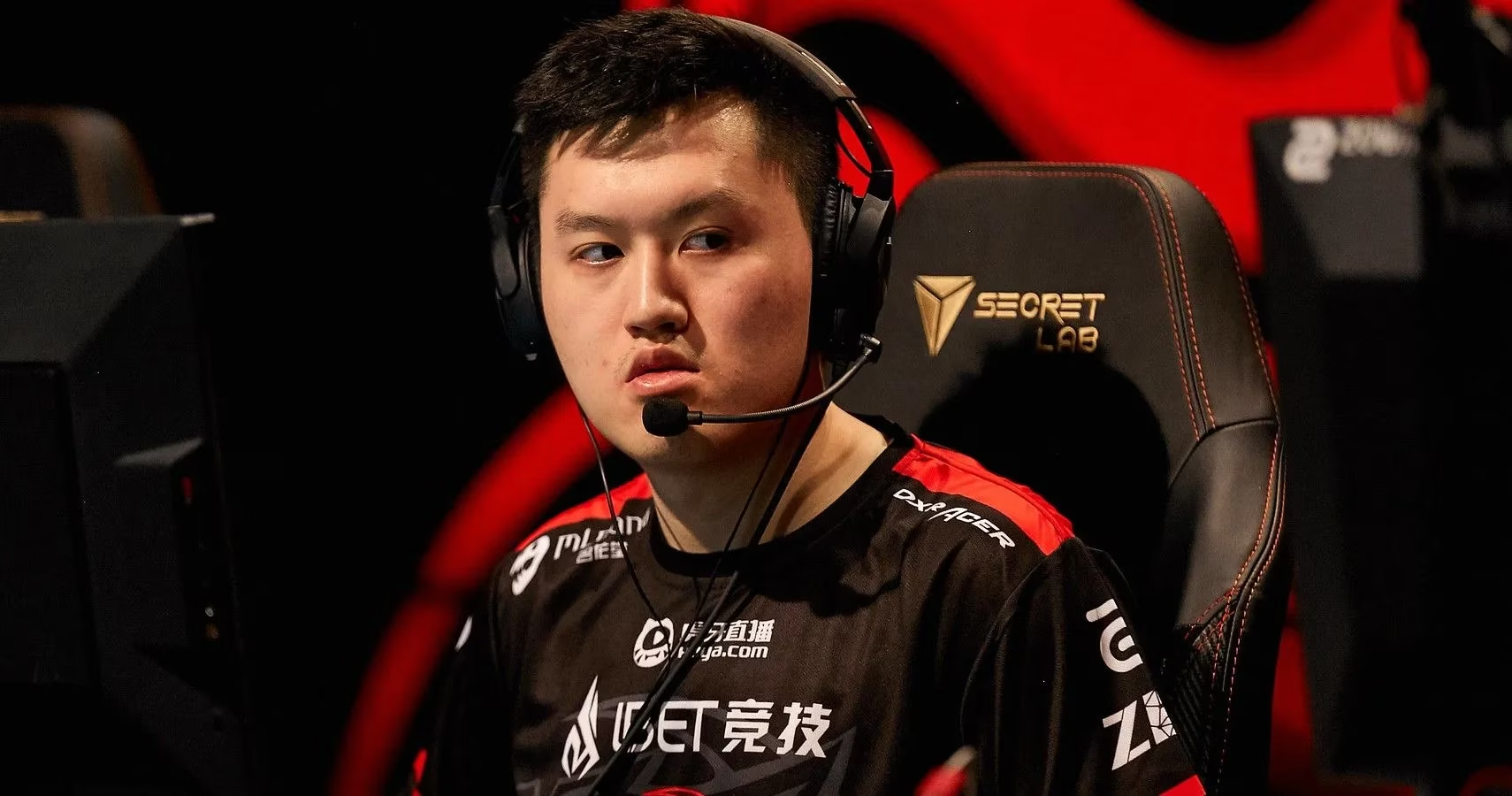
Meanwhile, on the other side of the Pacific, Gen.G was constructing something peculiar. Their foray into CS:GO wasn't following a regional blueprint. Instead, they assembled a predominantly North American core, snapping up the ex-Cloud9 trio of autimatic, daps, and koosta, alongside the young phenom s0m. This left a glaring, fifth-shaped hole in their roster. They were like a gourmet kitchen with premium ingredients but missing its signature spice—competent in qualifiers with a stand-in, but lacking the final, defining flavor needed for the main course of top-tier competition. The rumor mill, fueled by reports, began churning out one name as the perfect, if unexpected, seasoning: BnTeT.
The potential move was fraught with fascinating challenges and historic implications. BnTeT wouldn't just be changing teams; he'd be undergoing a cultural and competitive metamorphosis as drastic as a caterpillar's journey into a butterfly, if the caterpillar also had to learn a new ecosystem's survival rules mid-cocoon. He would be trading the familiar, structured environment of Asian CS for the volatile, individualistic arena of North America. The linguistic acrobatics required would shift from managing a polyglot Asian team to integrating into a primarily English-speaking one. Furthermore, his role was a giant question mark. Would the seasoned in-game leader from TyLoo retain those duties, or would he morph into a pure, unleashed fragger under the strategic guidance of daps? His adaptability would be tested like a Swiss Army knife at a survivalist convention—every tool would need to prove its worth.
From a broader perspective, this transfer was a landmark event. BnTeT was poised to become a true transcontinental trailblazer, one of the very first elite Asian players to plant his flag in a major Western region not as a temporary guest, but as a permanent fixture. His success or failure would be scrutinized not just as an individual performance, but as a bellwether for future cross-regional talent exchanges. Could a player's skill truly transcend the deeply ingrained meta and practice culture differences between Asia and North America? The esports world watched, intrigued, as this human experiment in competitive globalization took shape. 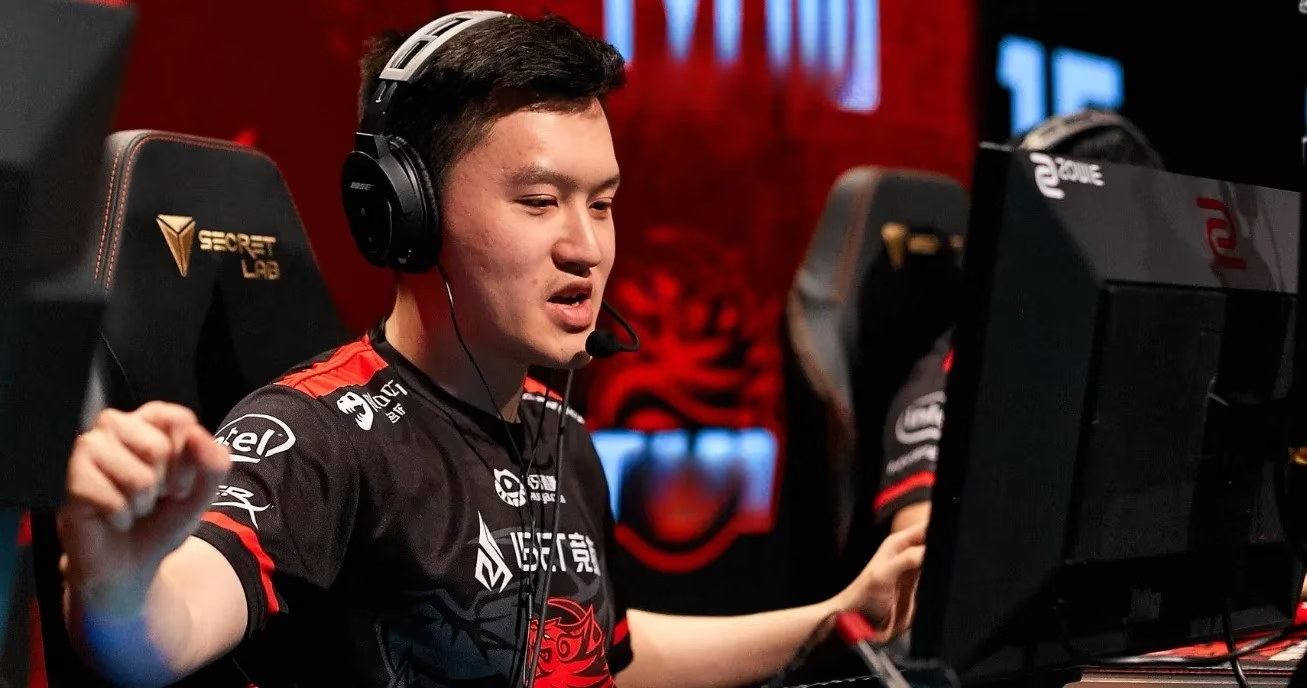
The reported timing added another layer of drama. BnTeT was still expected to represent TyLoo in the WESG China Regional Finals, making the entire situation feel like a high-stakes season finale where the protagonist hasn't yet decided which side he's on. The community was left in suspense, dissecting every possible outcome. Would his strategic mind, honed in the disciplined Asian scene, become Gen.G's secret weapon, a cryptic cipher that opposing North American teams couldn't decode? Or would the cultural and communicative friction prove too great, making the talented rifler feel as out of place as a samurai sword in a wild west duel?
| Aspect | The TyLoo Era (2017-2019) | The Gen.G Prospect (2026 Perspective) |
|---|---|---|
| Primary Role | In-Game Leader & Star Fragger | Presumed Star Fragger / Flexible Role |
| Linguistic Landscape | Trilingual (EN/CN/ID) Coordination | Primarily English Integration |
| Team Culture | Structured Asian System | Volatile North American Style |
| Historical Significance | Pillar of Asian CS Rise | Pioneer of Asia-to-NA Player Migration |
| LAN Rating | 1.17 (2019) | The great unknown 🤔 |
Reflecting from 2026, the BnTeT-to-Gen.G saga was more than just a transfer rumor. It was a narrative packed with the essential elements of great esports drama: legacy, risk, adaptation, and the relentless pursuit of glory on a global stage. It asked the fundamental question of whether raw, world-class talent could seamlessly transplant itself into foreign soil and not just survive, but thrive. As the scene evolved, this move would be remembered as a key moment that challenged regional paradigms and proved that in the search for victory, organizations were willing to look further than ever before, turning the world of CS:GO into a truly global chessboard where the most valuable pieces could come from any corner.
Comments