
As I log into Counter-Strike 2 for my nightly grind, I can’t help but reflect on the wild ride that got us here. It’s 2026, and CS2 has been the face of tactical shooters for over three years now—but the transition from CS:GO was far from a cakewalk. Valve’s decision to outright replace one of the biggest games in history felt like watching a high-wire act with no net. I remember the anxiety in the community back in 2023, the fear that our beloved Global Offensive might be botched beyond recognition. Now, with the benefit of hindsight, I can say this: Valve pulled it off, but not without some serious nail-biters along the way.
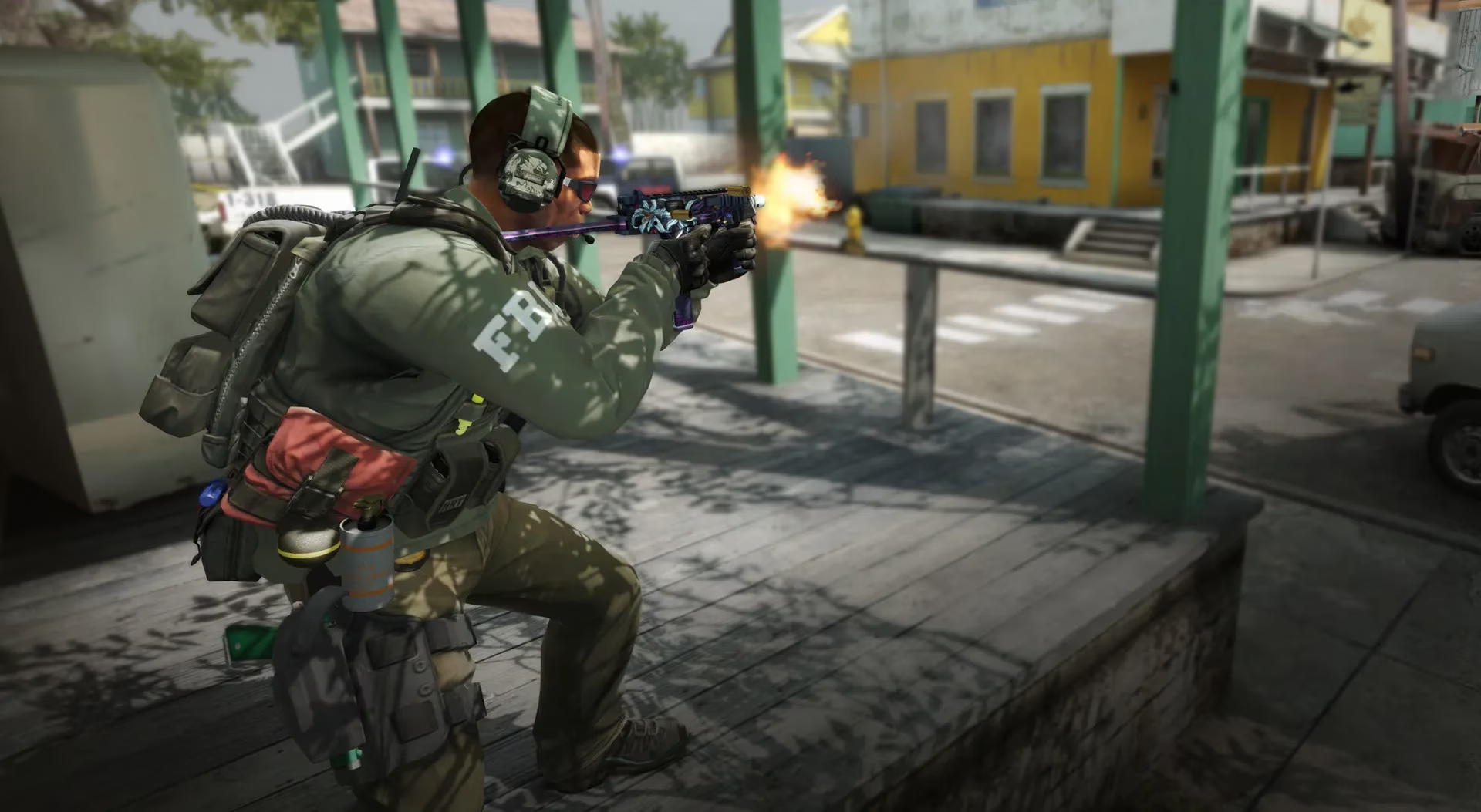
Let’s rewind a bit. When CS2 was first announced, the whole thing had a weird déjà vu effect. I’d lived through the 1.6 to Source migration, and later the Source to CS:GO leap. Both were messy. Hardcore players clutched to their old versions like gold dust, and Valve had to wrestle with splintered communities for years. With CS:GO, they finally achieved a stable, booming ecosystem—by 2019 it was the undisputed king of Steam, dwarfing even PUBG. So when they said they’d be replacing it entirely, my first thought was, “Here we go again.” But Valve had some aces up their sleeve. First, it’d be a free upgrade, not a separate $60 title. Second, every skin, every sticker, and all settings would carry over. That was a genius move to keep the economy and identity intact. But the real kicker? They’d done this dance before, and that institutional memory showed.
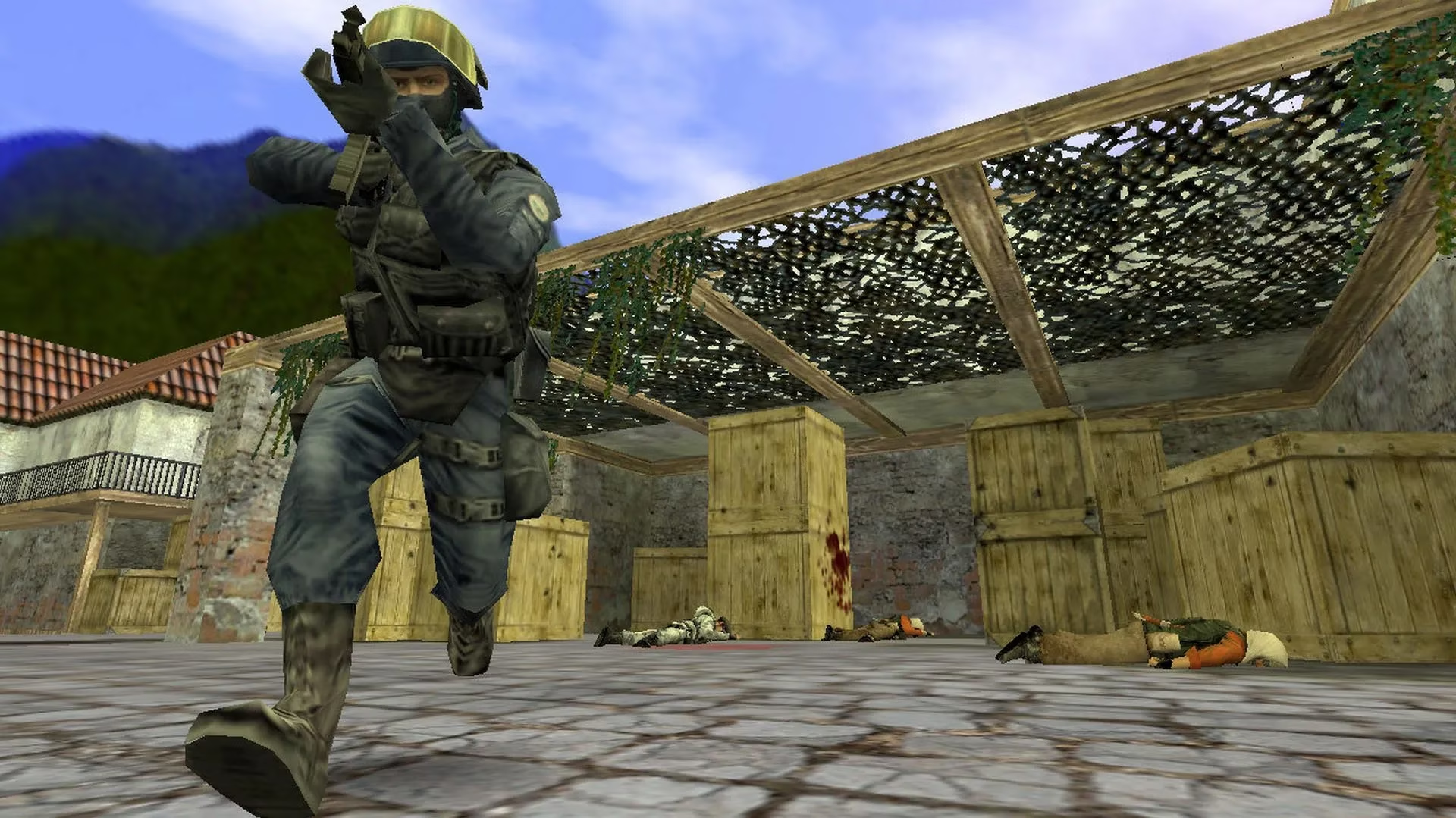
The early days of the Limited Test in 2023 were like peeking through a keyhole. I got my invite after obsessively checking my Steam notifications (pro tip: just play a ton of matchmaking and pray to Gaben). The changes were subtle but profound: smoke grenades that dynamically filled rooms and reacted to bullets, sub-tick servers that made hit registration feel crisp, and a fresh coat of paint on classic maps. But the community was on high alert. Every tiny deviation from CS:GO’s feel was scrutinized like a casino’s roulette wheel. I remember Reddit threads blowing up over movement speed, weapon balancing, even the sound of footsteps. It was the classic “comfort game” syndrome—change one pixel, and someone will scream that the sky is falling. But Valve stayed the course, tweaking things patch by patch, and by the time the official launch came in late summer 2023, most of the pitchforks had been put away.
Of course, not everyone jumped aboard immediately. I had a buddy whose PC couldn’t cut the mustard with the new Source 2 engine—his trusty GTX 960 finally bowed out. Others simply didn’t jive with the visual overhaul, preferring the gritty, washed-out look of CS:GO. There was no official way to revert, either. Valve had made it one-way, all-in. That hurt, but it forced the issue: adapt or move on. Many migrated, some stuck around quietly on third-party legacy servers (yes, they exist), but the steamrolling success of CS2’s competitive scene left little room for nostalgia. By 2024, seeing a CS:GO clip felt like spotting a VHS tape in a streaming world.
What I love now in 2026 is how CS2 has become its own beast. The esports scene is electric. Majors pack arenas, with sub-tick servers making clutch plays feel fairer than ever. The map pool has settled into a nice rotation—Dust II still rules, but Overpass and Ancient got glow-ups that keep things fresh. Valve’s continued support with operations and seasonal events has injected the kind of live-service flair they never quite nailed in CS:GO. Just last month, the “Chrome Horizon” operation dropped, adding co-op missions and a banger of a new weapon case. The skin economy is wild, with some old CS:GO skins appreciating like Bitcoin since they’re now “legacy” and display a tiny emblem. It’s a collector’s flex I never knew I needed.
Looking back, I think Valve’s tightrope walk succeeded because they knew their community inside out. They didn’t reinvent the wheel—they greased it. The fear of CS2 flopping like Overwatch 2 or losing players the way Warzone did was real, but the numbers tell a different story. Steamcharts shows CS2 maintaining a steady 1.2 million concurrent players, far above any competitor. That’s part of the magic: while other sequels forced players to start from scratch, CS2 said, “Come as you are.” That philosophy kept the flame alive. Sure, there were hiccups—cheater surges, server meltdowns after big updates—but nothing that tarnished the core experience.
So, as I queue into a Premier match with my trusty AWP | Dragon Lore (still worth more than my car), I tip my hat to Valve. They dared to sunset a giant and managed to keep the party going. It wasn’t perfect, but in gaming, “perfect” is often the enemy of “good enough to last another decade.” Here’s to the next ten years of headshots and heartbreaks. 💣🎯
Comments