
As I launch CS:GO in 2026, the game automatically starts in Trusted Mode—a system that has become the default reality for all players. This isn't just another update; it's Valve's most aggressive attempt yet to create a cheat-free environment by fundamentally changing how the game interacts with external software. But as I've experienced firsthand, this approach comes with significant trade-offs that affect legitimate players as much as potential cheaters.
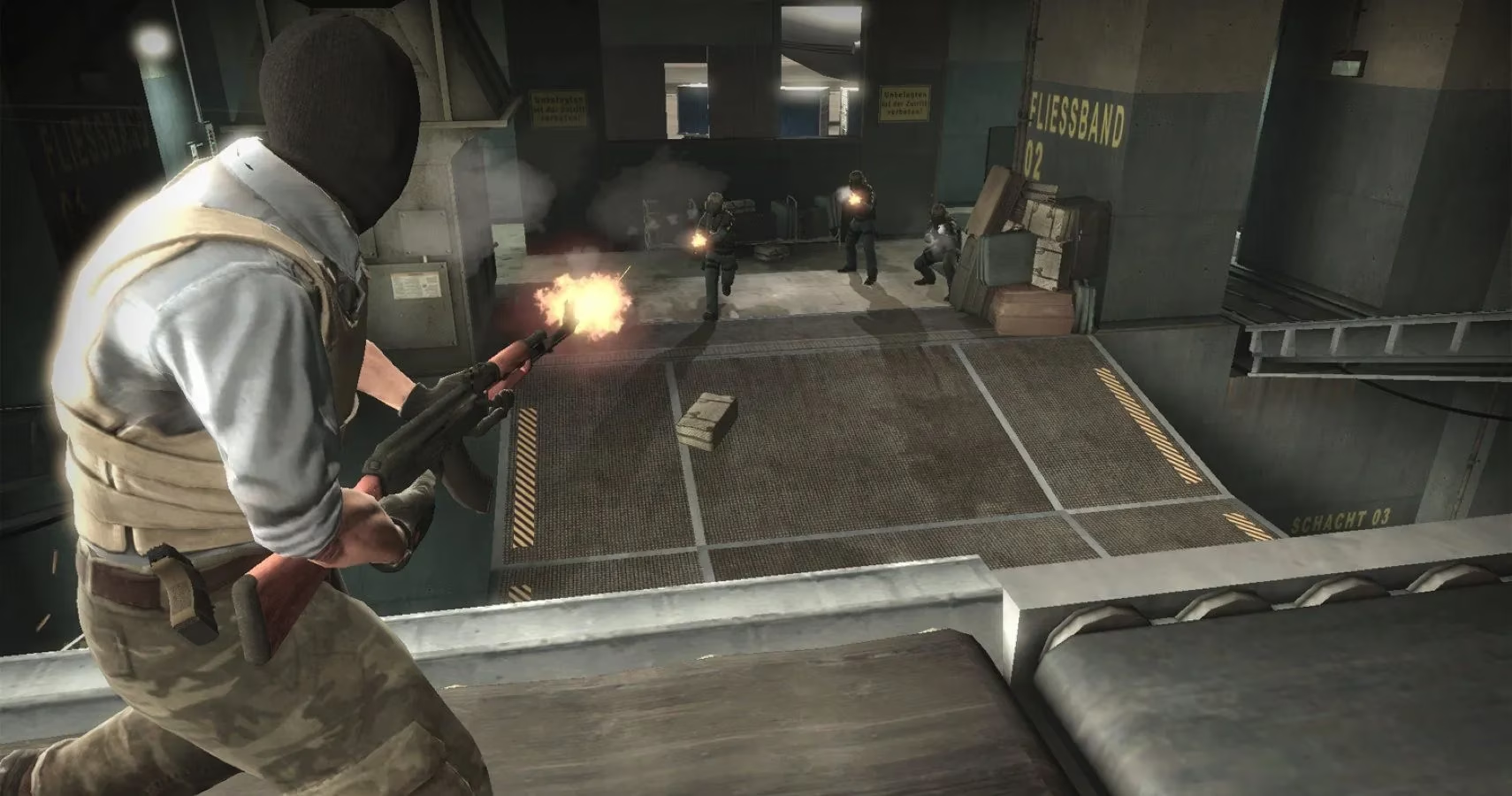
How Trusted Mode Actually Works
When I first encountered Trusted Mode, I was surprised by how comprehensive the restrictions were. The system essentially creates a digital fortress around CS:GO, blocking all third-party applications from communicating with the game unless they've received Valve's explicit approval. Here's what this means in practical terms:
🔒 Default Protection: Every time I launch the game, it automatically starts in Trusted Mode unless I specifically disable it
🔒 Digital Signatures Required: Third-party developers must have their DLLs "digitally signed" by Valve to function with CS:GO
🔒 Immediate Enforcement: If the game detects unverified code, it forces a restart in Trusted Mode
But here's the crucial question: Is this level of protection necessary, or has Valve gone too far in their pursuit of a cheat-free environment?
The Trust Score System: A Double-Edged Sword
What makes Trusted Mode particularly interesting is how it connects to CS:GO's trust factor system. When I choose to disable Trusted Mode and launch in "insecure" mode, my trust score takes a hit. This isn't just a theoretical penalty—it has real consequences for matchmaking:
| Action | Trust Score Impact | Matchmaking Result |
|---|---|---|
| Play in Trusted Mode | Maintains/Improves Score | Matched with high-trust players |
| Disable Trusted Mode | Score Decreases | Matched with low-trust players |
| Consistently Low Score | Severe Penalty | Restricted to hacker-filled queues |
This system creates a fascinating psychological effect. I find myself constantly weighing whether I really need to disable Trusted Mode for any reason, knowing that each time I do, I'm potentially condemning myself to worse matchmaking experiences.
The Unintended Casualties: Legitimate Software
This is where Trusted Mode becomes problematic for players like me who use CS:GO for more than just casual play. The most significant impact I've experienced is with streaming and content creation tools. Remember when OBS announced their game capture mode would no longer work with CS:GO? That limitation persists in 2026, forcing streamers into awkward workarounds:
🎥 Window Capture Only: I must run OBS in Window Capture mode
🎥 Windowed Mode Required: CS:GO must run in windowed rather than fullscreen
🎥 Performance Impact: This setup often reduces game performance and stream quality
But it's not just streaming software. Various legitimate tools I've used over the years—from custom crosshair overlays to performance monitoring software—have been caught in Trusted Mode's wide net. The message is clear: Valve values anti-cheat protection above all other considerations, even if it means sacrificing functionality that legitimate players rely on.
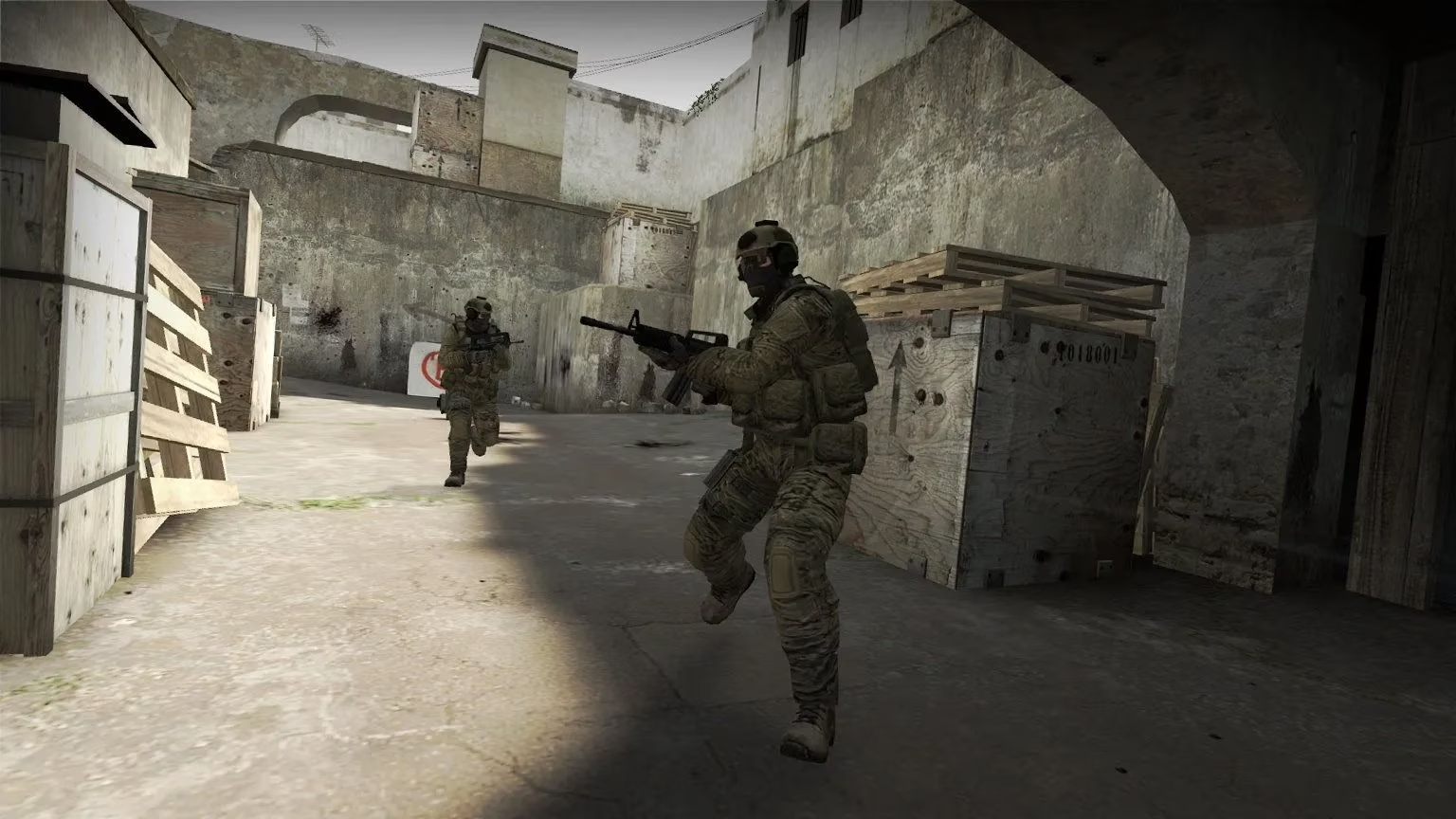
Technical Issues and Launch Problems
Perhaps the most frustrating aspect of Trusted Mode has been the technical issues. I've encountered situations where the game simply wouldn't launch, displaying cryptic error messages about blocked software. While Valve's intention is to prevent cheating software from loading, the reality is that legitimate applications can sometimes trigger the same blocks.
Consider these common scenarios I've faced:
-
Anti-virus conflicts: Some security software gets flagged by Trusted Mode
-
Hardware monitoring tools: Applications that track GPU/CPU usage can be blocked
-
Audio enhancement software: Tools like Voicemeeter sometimes cause issues
-
Custom peripheral software: Advanced mouse/keyboard configurations can trigger blocks
The problem is compounded by the fact that troubleshooting is difficult. When Trusted Mode blocks something, it doesn't tell me what specifically caused the issue—it just prevents launch or forces a restart.
The Security vs. Accessibility Balance
As I reflect on several years of playing with Trusted Mode, I can't help but wonder: Has Valve struck the right balance? On one hand, I've definitely noticed fewer obvious cheaters in my matches. The days of running into spin-botters and blatant wallhackers have become rare. But at what cost?
Let me break down the trade-offs as I see them in 2026:
✅ Pros:
-
Reduced cheating in regular matchmaking
-
More consistent competitive experience
-
Forces cheat developers to work harder
-
Creates psychological barrier against cheating
❌ Cons:
-
Limits legitimate third-party software
-
Creates barriers for content creators
-
Can cause technical issues for some players
-
Reduces customization options
-
May drive some players away from the game
The Future of Anti-Cheat in Competitive Gaming
Trusted Mode represents a philosophical shift in anti-cheat approaches. Instead of trying to detect cheating software while it's running, Valve has chosen to prevent it from running in the first place. This "walled garden" approach has become increasingly common in competitive gaming, but CS:GO's implementation remains one of the most restrictive.
Looking forward, I see several possible developments:
-
More sophisticated whitelisting: Valve could improve their system for approving legitimate software
-
Hardware-level integration: Future anti-cheat might work more closely with hardware manufacturers
-
Community-driven solutions: Perhaps players could vote on which types of software should be allowed
-
Tiered trust systems: Different levels of restriction based on player behavior and history
My Personal Verdict After Years of Experience
Having played with Trusted Mode as the default for several years now, I have mixed feelings. Yes, I appreciate playing in matches with fewer cheaters. The competitive integrity of the game has undoubtedly improved. But I also miss the flexibility I once had—the ability to seamlessly stream, use custom tools, and personalize my gaming experience without jumping through hoops.
What's particularly interesting is how Trusted Mode has changed the community's relationship with third-party software. Many developers have simply stopped creating tools for CS:GO because the approval process is too burdensome. This has created a more standardized but less innovative ecosystem around the game.
Final Thoughts: A Necessary Evil?
As I queue for my next match in 2026, I accept Trusted Mode as part of CS:GO's reality. The cheating problem was severe enough that drastic measures were necessary. But I can't shake the feeling that there must be a better way—a system that protects competitive integrity without punishing legitimate players who want to enhance their experience.
Perhaps the ultimate question is this: In our pursuit of perfect security, are we sacrificing too much of what makes PC gaming special? The ability to customize, modify, and personalize our experiences has always been a hallmark of PC gaming, and Trusted Mode represents a significant step back from that ideal.
For now, I'll continue playing in Trusted Mode, accepting its limitations as the price of fair competition. But I'll always wonder what CS:GO could be if Valve found a way to balance security with the creative freedom that has always defined PC gaming. After all, isn't that balance what made games like CS:GO so special in the first place?
Comments