
I’ve bought actual cars for less money than what a collection of digital CS2 stickers is going for right now. No, I’m not talking about some ancient Katowice 2014 Titan Holo – I mean fresh-off-the-press Cologne 2026 Major stickers, the kind you’d normally impulse-buy with the change from a Steam Wallet top-up. Yesterday, a full set of the top 100 Cologne Major stickers was ringing in at $19,447.37, with the priciest one a wallet-wilting $1,522. That’s more than my first car, my current car, and probably whatever Gabe Newell uses to commute to the office. And you can’t even put a cast iron pan in the trunk of a sticker.
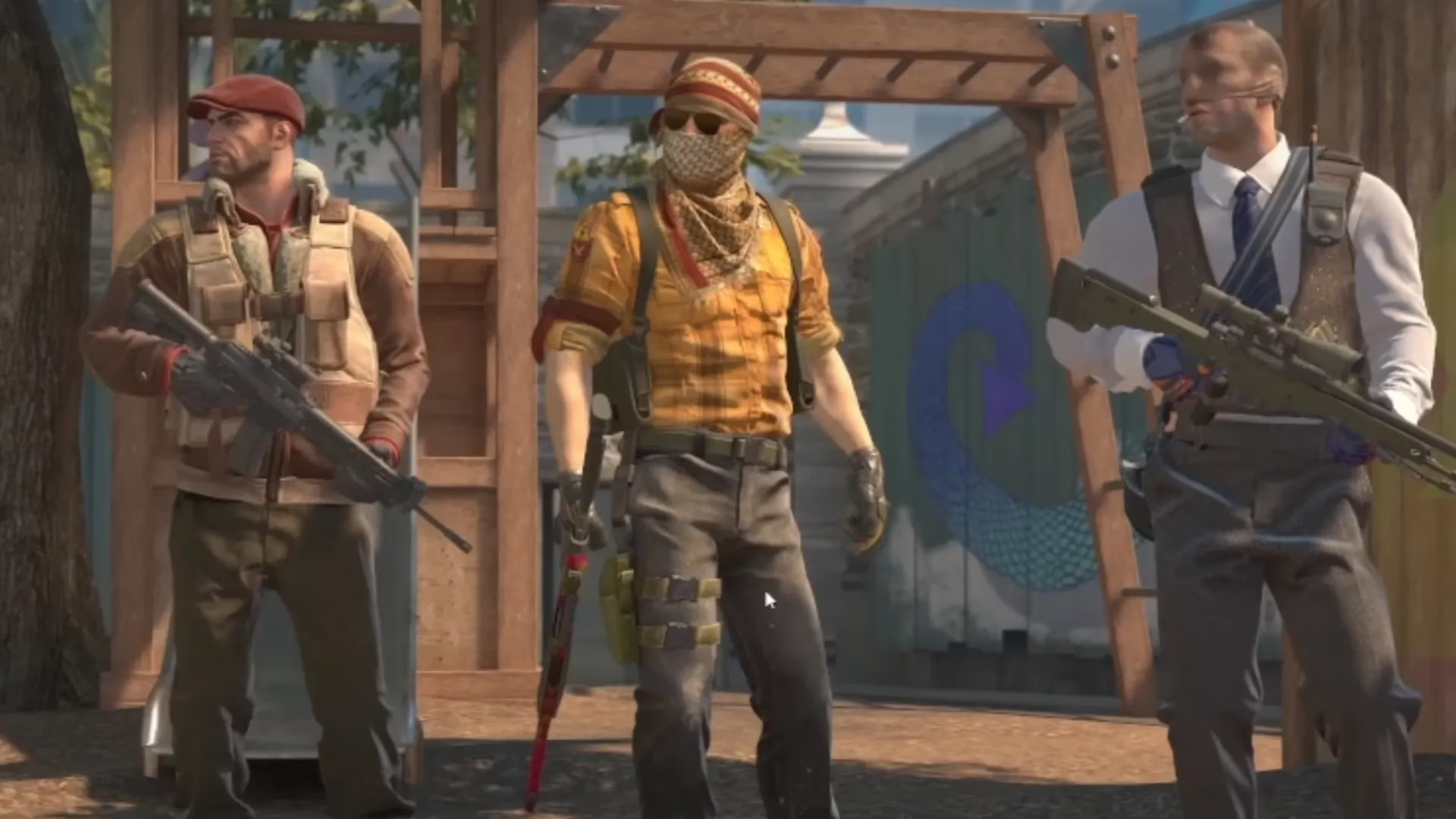
So how did we end up here? Let me back up the hype train and explain. Valve decided to give the CS2 Major Shop a total facelift earlier this year, and boy, did they ever. Out with the old system of sticker capsules – those gacha-flavoured boxes of joy and despair – and in with a new token-based store. You buy tokens, you redeem them for any sticker you fancy. Sounds innocent enough, like a digital candy shop, until you realize the price tags are subject to the whims of demand. Quote unquote: “The prices of stickers will depend on relative demand (when lots of players buy a particular sticker, its price goes up and other sticker prices go down).” It’s basically surge pricing for pixels. Uber for your inventory.
The Cologne Major rolls into town, and suddenly everyone wants a piece of the action. Demand skyrockets, and so do the sticker prices. I get it, FOMO is a hell of a drug, but come on – we’re talking about JPEGs you can’t even flex in a pit lane. And the refund policy? Valve says if a sticker price drops by more than 25 tokens within 24 hours of your purchase, you get the difference back. That’s about as comforting as a parachute packed by a cat. The market is more volatile than my aunt’s Christmas punch, and a 24-hour window feels like using a teaspoon to bail out a sinking cargo ship. Players have been howling into the Steam forums that they can’t participate because the barriers are higher than Mirage’s skill ceiling. One bewildered soul on Reddit summed it up perfectly: “Turn a fun random sticker capsule into inaccessible investing on pixels.” Preach.
Now, I’m no economist, but when a digital item with unlimited supply is priced like medieval pork during a famine, my Spidey sense tingles. The whole point of dynamic pricing in this context is to recreate scarcity where none exists. It’s artificial FOMO, and we’re all suckers in the game. I mean, even hardcore traders who treat skins like a stock portfolio are raising eyebrows so high they’ve left the hitbox. And the cherry on top? Valve insists this isn’t about money. They claim the old capsule system “was popular” but heard feedback that players wanted direct purchases, especially those in regions where capsules were restricted. Sure, and I’m the King of Dust II. It’s a real monkey’s paw wish: “Let us buy stickers directly, please.” Granted – now you need a mortgage.
Here’s where it gets extra spicy. 50% of the Major Shop and Major Pass revenue gets shared with tournament organizers, teams, and players. If nobody can afford the top-tier stickers, the payout pool could end up as dry as a Deathmatch lobby. Imagine a Cologne Major where the winner takes home less cash because the sticker market was too bougie for the common player. That’s not just bad for the pros – it’s a long-term self-own. We’ve already seen prize pool fluctuations bigger than a Nuke boost, and this system could make the extremes even extremier. Valve might be trying to dodge loot box regulation and regional hassles, but they’ve accidentally created a digital aristocracy.
Honestly, I feel like I need a financial advisor to spectate a Major now. Will the sticker I like plummet tomorrow? Who knows! It’s the thrill of the gamble, except without the actual boxes – progress? Meanwhile, Valve is over here telling us they can’t stop winning, and I’m staring at a sticker costing more than a family holiday. Gabe Follower’s price breakdown made my eyes water: $19,447.37 for a complete set. For context, that’s roughly four times my rust bucket, and I once drove that thing through a literal hailstorm. At least I could sit in it.
I can’t help but wonder: what’s next, a dynamic pricing model for team autographs? Will my digital sticker eventually come with a terms and conditions longer than a Tolstoy novel? The wildest part is, I still caught myself browsing the shop, clicking through the pages like a kid in a candy store that charges by the ounce. The allure is real, even when the logic is not. Valve knows exactly what they’re doing, and we’re all just pixel pilgrims on their journey to the moon.
So here I sit, watching the sticker economy scorch itself into absurdity, clutching my one affordable Cologne 2026 paper souvenir like a lottery ticket. And somewhere, a CS2 player who just wanted to support their favorite team is weeping into an overpriced energy drink. The digital arms race continues – may your tokens be ever in your favor.
As we navigate this ever-evolving landscape of digital collectibles, it’s clear that finding value amidst the hype requires a keen eye and perhaps a bit of luck. While some players might just be looking for bragging rights with their sticker collection, others are on the hunt for genuine bargains. If you're among those searching for a more grounded approach to gaming investments, you might want to check out game deals today. DealNest offers insights into current gaming offers that could help gamers find the best value for their money without getting caught up in the sticker shock of virtual economies.
With so many layers to the gaming market, having resources that provide clarity can be a game-changer. Whether you're trying to catch up on the latest trends or simply looking for a great deal to enhance your gaming experience, exploring platforms like DealNest can offer a fresh perspective. After all, amidst the allure of the digital sticker economy, there's value in knowing where to invest wisely and what truly enriches your gaming journey.
Comments