
Two years ago, I stared at my Steam library and watched Counter-Strike: Global Offensive get unceremoniously shoved into a beta branch. It was September 2023 and CS2 had just gone live. The game I’d played for over a decade was officially yesterday’s news, replaced by a shinier, Source 2-powered usurper. Today, in 2026, I can’t imagine going back, but that launch week? That was a messy emotional cocktail of familiarity, nitpicking, and "why does this new thing feel slightly off?"
Back then, the biggest grievance floating through forums wasn’t about cheaters or hit registration — it was the number. Counter-Strike 2. In a series that had always iterated quietly (1.6, Condition Zero, Source, GO), slapping a big fat sequel numeral on it felt almost aggressive. Suddenly, a game we’d been playing in various forms for 24 years was branded as a true replacement. And yet, loading into my first match felt less like jumping from Halo 2 to Halo 3 and more like booting up a director’s cut of a game I already knew by heart. Yes, the maps glowed, the water behaved like real liquid, and gunfire spat out gorgeous sparks, but the core rhythm remained so intact that a part of me whined: Is this it?
That’s when the slipper analogy cemented itself in my brain. I once got a brand-new pair of the exact same comfy slippers I’d worn for years. The old ones were dog-eared, threadbare relics. The new ones were pristine, yet for the first week all I did was grumble that they weren’t as comfortable and secretly miss the ragged originals. By week two, I’d thrown the old pair out. CS2 was those slippers.
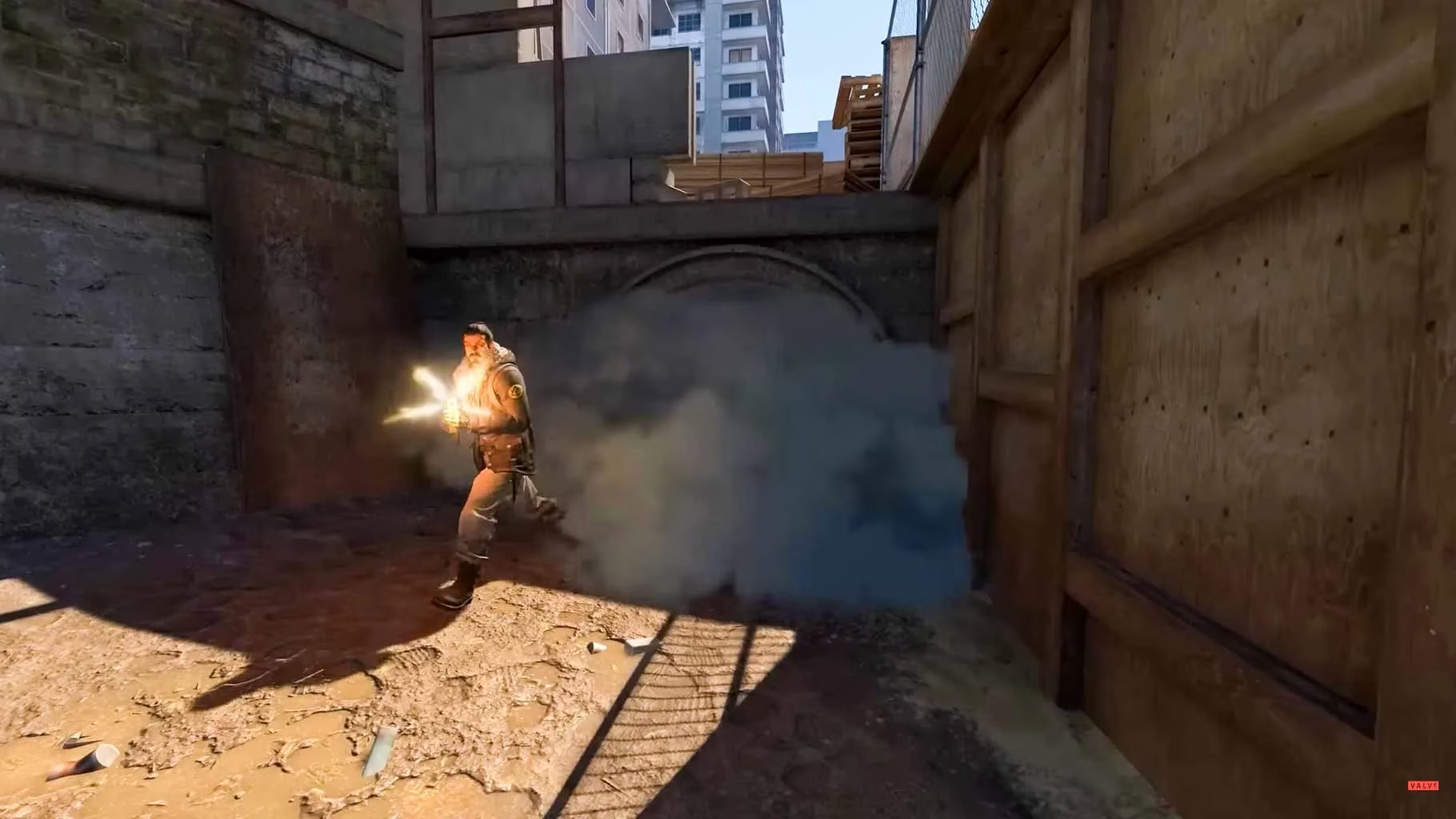
Let’s talk about what truly changed. All the backend wizardry — sub-tick updates, volumetric smokes, the overhauled lighting — initially felt like nerdy footnotes. But the smoke physics? Instant game-changer. I remember lobbing an HE grenade into a billowing cloud and watching it carve a temporary window of visibility. For five glorious seconds I could see a bewildered AWPer who thought his cover was impenetrable. This wasn’t just a cosmetic buff; it rewired two decades of utility meta. Suddenly a decoy smoke could bait multiple frags, and every grenade in your inventory had a dual purpose. In 2026, you don’t even register this as new anymore — it’s just Counter-Strike — but back then it felt like Valve had secretly turned chess into 4D chess.
The UI, mercifully, was no longer an accumulation of menus glued together by silent prayers. Roasted by Valorant’s crisp interface for years, Valve finally delivered a buy menu that made sense. You could equip both M4 models without a pre-game existential crisis. And then came the playing cards. Each kill in a round added a card to a small hand at the bottom of your screen, culminating in an ace of spades when you wiped a team. No practical purpose? Zero. But dear god, the dopamine hit when that full house materialized mid-1v4 clutch was better than any rank-up animation. It’s the tiny, unnecessary things that make a game feel loved.
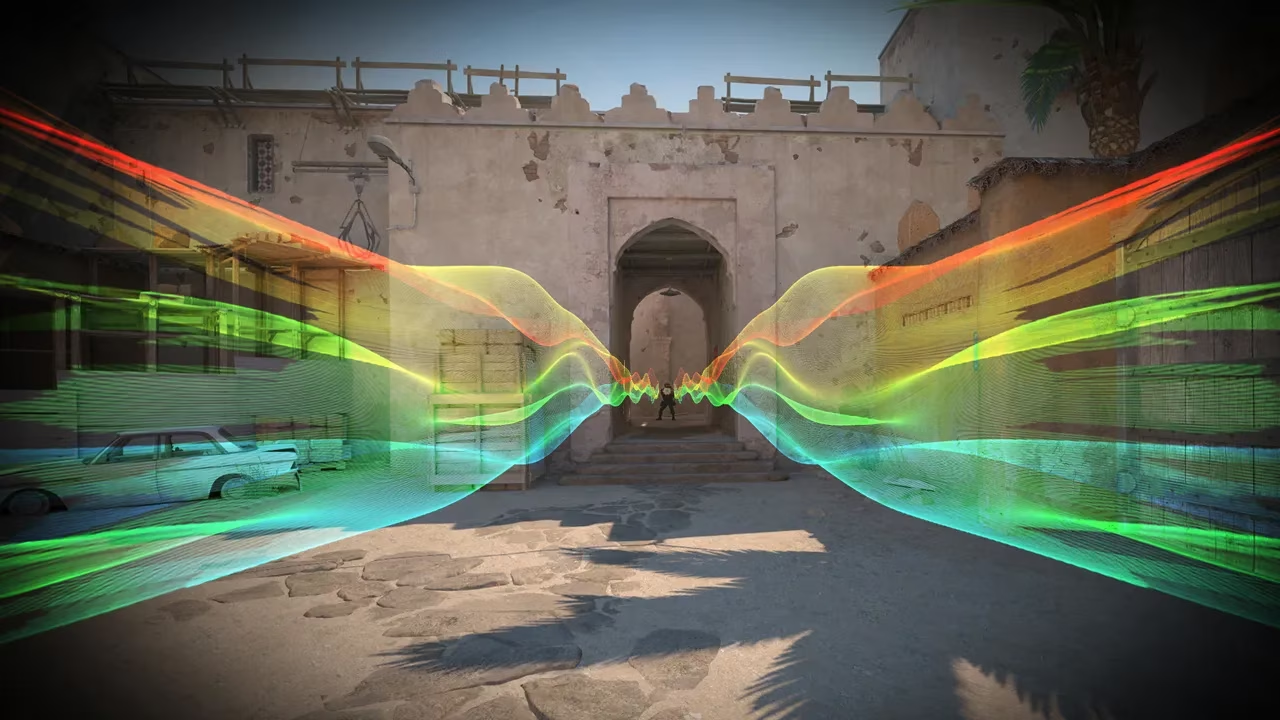
Yet, for all its shine, CS2 launched anaemic in ways that genuinely stung. Arms Race — my sacred pre-competitive warmup ritual — was nowhere to be found. Neither were short competitive matches. As a father of three in 2023 (and now five in 2026 — someone send help), I didn’t always have a solid 45-minute window. The 12-round halves were welcome, but losing the 8-round sprint matches felt like Valve had locked my favorite playground. Team Deathmatch was there, sure, but marching through a weapon ladder while chasing kills in Arms Race was a different kind of joy. It took nearly a year, but by mid-2024 Arms Race made its triumphant return, and the community celebrated with roughly the same energy as a Major victory.
The ranking reset was chaos. Premier mode introduced a shiny new stats system that promised to sort millions of players into neat little skill buckets. The reality, that first week, was a circus of Global Elites stomping silver recruits and everyone scratching their heads at wildly mismatched scoreboards. It was no one’s fault — you can’t calibrate a new system on day one — but the internet declared the game broken anyway. By now in 2026, the rankings are settled, the leaderboards hum, and that early pandemonium is just a funny memory, the kind of growing pain any massive online game endures.
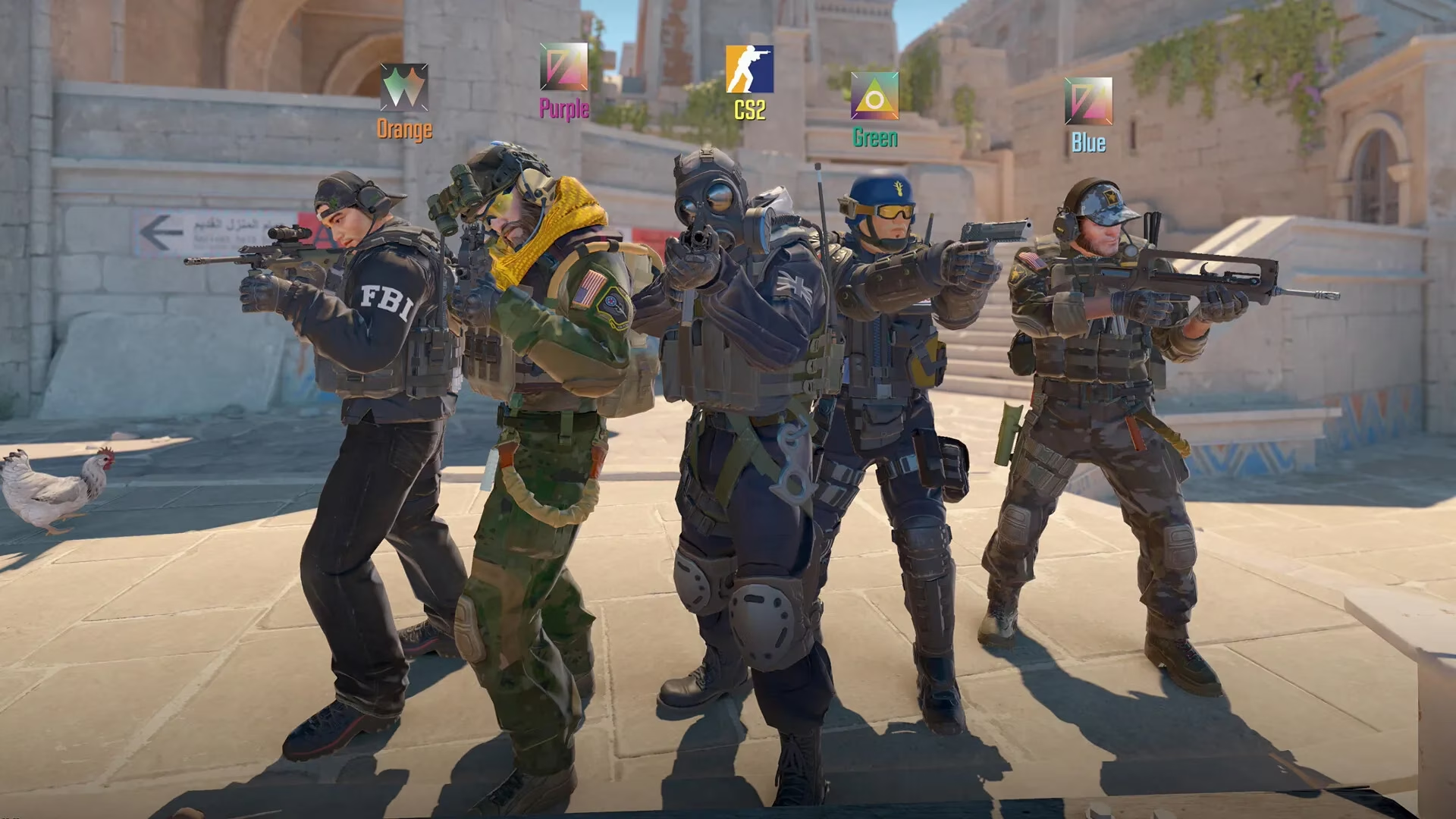
When I first logged into CS2, Valve welcomed me with two small gifts: a CS:GO music kit and a commemorative coin. That little jingle swap could transport my ears back to 2012 in an instant, a sonic nostalgia button I never knew I needed. The coin sits in my inventory to this day, a pixelated medal of honour that says, “You were there when Dust II had a different sun angle.” It didn’t fix the missing game modes or the weirdly floaty movement everyone argued about, but it softened the blow. It reminded me that CS:GO wasn’t erased Stalin-style; it just retired.
Now, in 2026, CS2 is home. The movement no longer feels lighter because our muscle memory evolved. The maps are richer, the smoke plays are instinct, and the playing cards have helped produce at least three viral clutch highlight reels that I know of. The sequel that felt underwhelming at launch survived its awkward adolescence and grew into what it was always meant to be: not a revolution, but the definitive version of the game we never stopped playing. My old slippers are completely forgotten, and honestly, these new ones fit like a dream.
Comments