
As I look back from the vantage point of 2026, it's almost surreal to think about. I've been playing Counter-Strike for over half my life now. How many games can claim to have been a constant, evolving presence for nearly a quarter of a century? Most competitive shooters celebrate a five-year run as a success; a decade is legendary. Yet here we are, with Counter-Strike not just surviving but thriving, its core essence remarkably intact since those early days. What is it about this game that has forged such an unbreakable bond with millions of players across generations? The answer, I've come to realize, isn't found in a single feature, but in a perfect storm of design, community, and timing that created something truly timeless.
A Scene Built to Last: Why Competition Never Faded
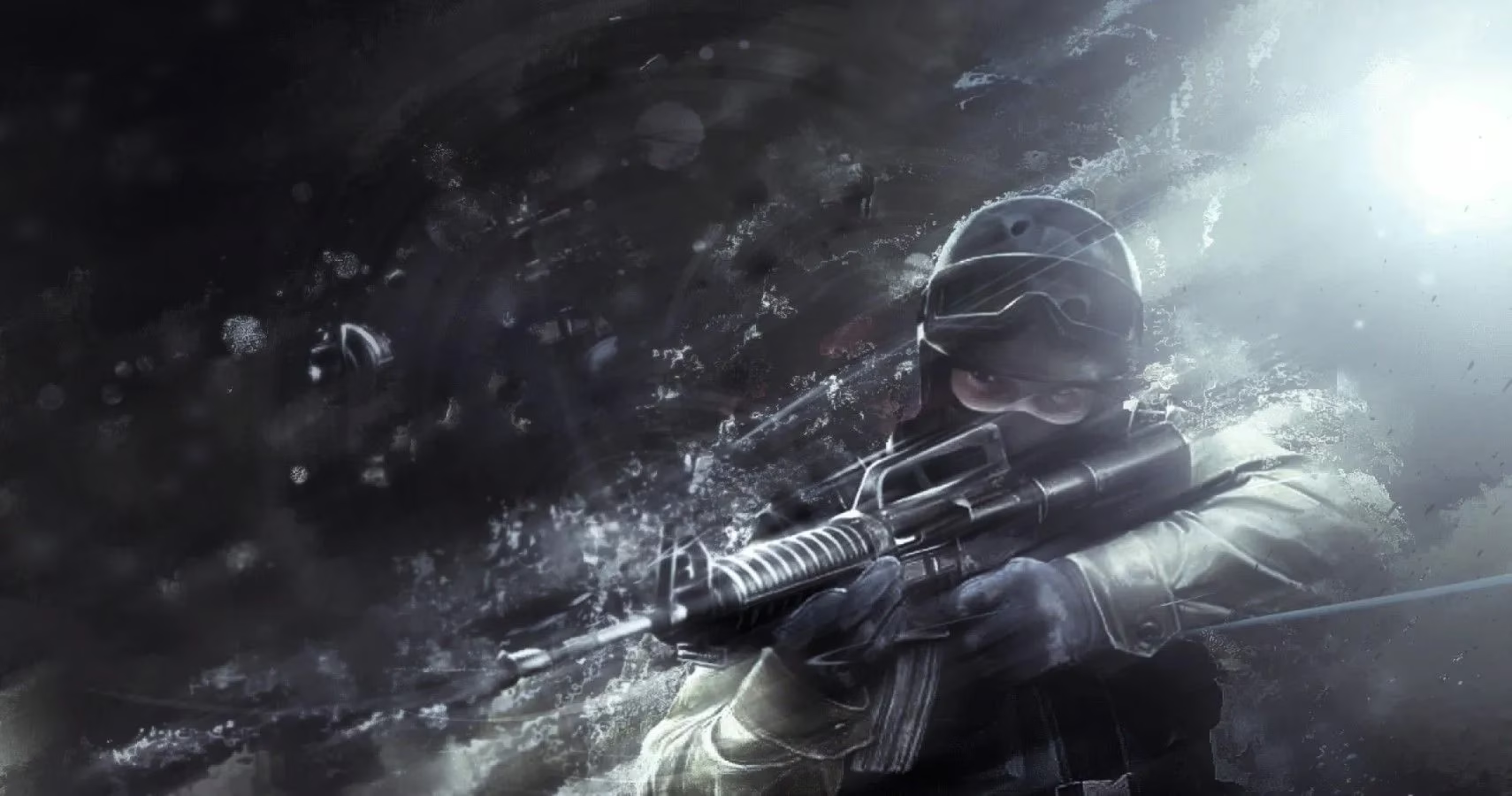
Some voices occasionally surface, predicting the decline of CS:GO's successor. But can you really argue with the evidence? Every year, the competitive calendar grows more packed, and fresh teams emerge, hungry to etch their names into history. It would be simplistic to credit this longevity solely to the game's infamous skill ceiling—though that's a massive part of it. But have you ever wondered why other titans like Call of Duty or Battlefield never managed to build a competitive scene with similar staying power?
The difference, I believe, is one of philosophy. Many modern shooters shifted focus, prioritizing cinematic spectacle and constant action over tactical purity. Their competitions began to feel less like high-stakes chess matches and more like slightly organized public matches. Counter-Strike, in beautiful contrast, never compromised. It remained a game about precise angles, economic management, coordinated executes, and raw mechanical skill. It thrived, in a way, from a lack of direct competition in its specific niche. Where was the game that demanded more from its players in terms of teamplay and individual mastery? For years, the answer was simply: nowhere else.
The Engine of Growth: Investment Meets the Digital Age
I remember the early days of following the scene. Tournaments were often passion projects, run on shoestring budgets. Organizers would talk openly about the financial instability, hoping to just break even after covering venue and security costs. The dream was always sponsorship. But what truly changed the game?
The arrival of major investors like Intel and ESL provided crucial stability and prestige. The Intel Grand Slam, with its million-dollar prize, wasn't just a reward; it was a statement that this was a serious sport. However, the real rocket fuel was something else entirely: the rise of video streaming.
Think about it. Before platforms like Twitch became ubiquitous, how did you watch esports? It was often a grainy, unreliable stream on a niche website. The professionalization of streaming turned tournaments into global, accessible spectacles. Suddenly, ESL's main channel could amass millions of followers—a number unimaginable in the early 2000s. This visibility created a virtuous cycle: more viewers attracted bigger sponsors, which funded better productions, which attracted even more viewers. We, the players and fans, became part of the show, and the scene grew because of it.
The Developer-Player Symbiosis: What Valve Understood
Let's be honest, the developers at Valve haven't been perfect. We've all grumbled about an update or a new skin release. But their greatest strength, the one that has safeguarded the game's soul, is their willingness to listen. When the community identifies a problem—be it a overpowered weapon or a map imbalance—Valve has consistently demonstrated a commitment to course-correct. They synthesize feedback from pros and casual players alike, seeking solutions that serve the competitive integrity above all.
Their approach to accessibility was masterful. They resisted the temptation to "dumb down" core mechanics like spray control to attract a broader audience. Instead, they lowered the financial barrier, first with a low price point and eventually making the game free-to-play. The message was clear: "Come and try. The challenge is part of the reward." This preserved the game's punishing but fair learning curve.
And that, perhaps, is the most magical ingredient. In a world where many games hide player skill behind layers of randomness or overpowered abilities, Counter-Strike remains a stark meritocracy. Your success is overwhelmingly determined by your knowledge, your reflexes, your teamwork, and your practice. There's a profound joy in that. You stop blaming luck or "broken" mechanics. You start appreciating an opponent's superior crosshair placement or a team's flawless execute. The game rewards dedication and punishes complacency. Isn't that what a true sport should do?
The Legacy in 2026 and Beyond
So, as I log in for another match in 2026, the landscape has evolved. The graphics are sharper, the meta has shifted countless times, and new stars have risen. Yet, the heartbeat of the game—the tense buy rounds, the clutch-or-kill moments, the strategic depth of de_dust2 and its brethren—remains unmistakably Counter-Strike. It outlasted trends because it was never chasing them. It built a world where skill is transparent, community feedback matters, and competition is sacred.
The story of Counter-Strike is a lesson in game design integrity. It proves that when you create a deep, skill-based ecosystem and foster it with respect, you don't just make a game; you build a legacy that can span decades. And for players like me, that legacy is the home we keep coming back to, one round at a time. 🎯💥
Comments