
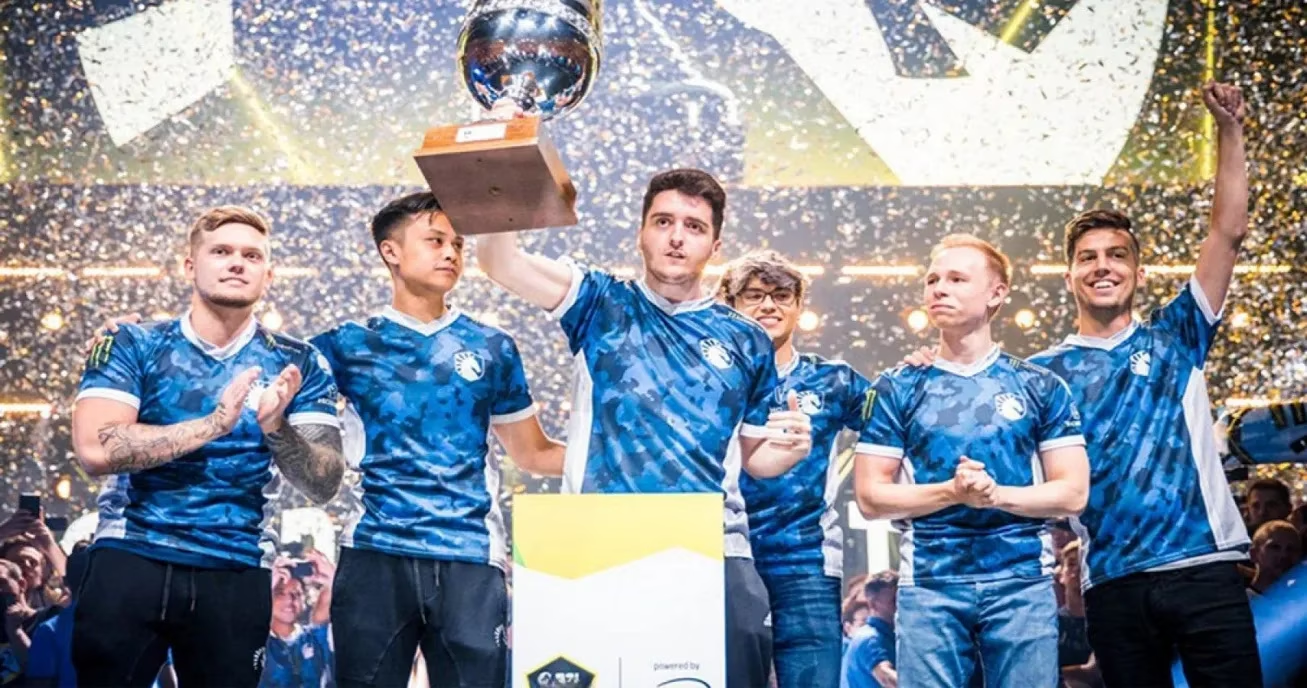
As I reflect on the competitive landscape of Counter-Strike: Global Offensive, the year 2026 feels like a world apart from the explosive growth period that began over a decade ago. Back in 2019, Team Liquid's stunning capture of the Intel Grand Slam in a mere 63 days sent shockwaves through the entire eSports ecosystem. That achievement was a testament to their incredible peak form, but it also acted like a seismic event that forced tournament organizers to re-evaluate the very foundations of elite competition. The goal has always been to crown the undisputed best, and that feat, while impressive, seemed to happen almost too fast, like a wildfire ripping through a dry forest before anyone could truly appreciate its controlled burn. In response, ESL and Intel wisely began a process of refinement, ensuring the Grand Slam remained the ultimate, hard-fought marathon, not a fleeting sprint.
The Genesis of Grandeur: Why the Intel Grand Slam Mattered
The introduction of the Intel Grand Slam in 2017 was a masterstroke. While CS:GO had established itself as a premier eSport, this series injected a new layer of narrative and prestige. Before this, the scene, though passionate, could sometimes feel like a series of isolated peaks. The Grand Slam connected these tournaments into a cohesive mountain range, challenging teams with a long-term, season-spanning objective: win four of ten designated elite events and claim a $1 million bonus. Astralis, the legendary Danish squad, rightfully claimed the inaugural title, setting a high bar. But when Team Liquid matched that feat in record time, it was clear the format needed to evolve to match the ever-increasing skill ceiling and strategic depth of the professional scene.
The 2026 Blueprint: A More Demanding Path to Glory
The core philosophy behind the changes, which have been in effect for several seasons now, is elegant in its increased difficulty. The principle remains: win four specific tournaments. However, the path is now bifurcated, demanding strategic planning from teams and their organizations.
Path A: The Prestige Route
To claim the Grand Slam under this route, a team's four victories must include at least one of the so-called "Crown Jewel" events:
-
IEM Katowice (The "Winter Cathedral" of CS:GO)
-
A CS:GO Major Championship (The holy grail, governed by Valve)
-
ESL One Cologne (The legendary "Cathedral of Counter-Strike")
This requirement ensures that any Grand Slam winner has proven themselves on the absolute biggest stages, under the most intense pressure. It's a check against a team dominating a string of smaller, albeit still elite, events without conquering the landmarks that define an era.
Path B: The Gauntlet Route
For a team that, somehow, does not win one of the three Crown Jewels during their dominant run, the challenge becomes Herculean. They must win all six of the other designated tournaments in the Grand Slam series. This path is like navigating a minefield blindfolded; the consistency and mental fortitude required are almost superhuman, making a Grand Slam victory via this route a legendary achievement in its own right.
Interestingly, when these rules were first proposed, analysis showed that both Astralis and Team Liquid would have still won their Grand Slams. This proved the changes weren't about invalidating past glory, but about future-proofing the accolade.
The Ripple Effects on the Modern Scene (2026 Perspective)
Looking at the scene today, the impact of these structural changes is clear:
| Aspect | Pre-2019 Era | Post-Reform Era (2026 Perspective) |
|---|---|---|
| Narrative Depth | Focus on individual tournament wins. | Creates season-long storylines around the "Grand Slam chase." |
| Team Strategy | Rosters built for peak performance. | Rosters and schedules are now built for sustained excellence across varied, high-stakes events. |
| Viewer Engagement | High for Majors, variable for other events. | Every Grand Slam event carries heightened stakes, boosting consistent viewership. |
| Legacy Definition | Defined by Major wins. | Now also defined by the ultimate consistency of a Grand Slam victory. |
The necessity for teams to perform at the Crown Jewel events has also intensified rivalries and raised the stakes at every tournament. A team's year isn't just about winning a big event; it's about plotting a course through the entire circuit. This has, in my view, elevated the tactical preparation of teams to a level akin to a grandmaster plotting a chess championship, thinking ten moves ahead in a calendar filled with potential pitfalls.
The Constant Challenge: Avoiding Stagnation
While the Grand Slam reforms were a crucial step, the work is never done. The core challenge for organizers like ESL and partners like Intel remains: how do you keep the competition fresh and unpredictable while still rewarding sustained excellence? We've seen dynasties rise and fall, and the fear of viewer fatigue when one team dominates is real. The current system, by mandating wins at specific, historic tournaments, helps ensure that a dominant team's reign is tested in different environments and against the absolute best competition the world can muster at that moment.
Furthermore, the evolution of the game itself—with new maps, meta-shifts, and ever-younger talent emerging—acts as a natural balancing force. A team's playbook that secures a Crown Jewel win in January might be dissected and countered by June. The Grand Slam, in its modern form, tests not just skill, but adaptability and resilience over a grueling campaign.
Final Thoughts: A Trophy Forged in Fire
As I watch the 2026 competitive season unfold, the Intel Grand Slam trophy represents something more tangible than ever. It's no longer just a bonus for winning four tournaments; it's a medal earned by conquering specific, legendary summits or by demonstrating near-flawless perfection across an entire season. The reforms initiated years ago have successfully transformed the feat from a brilliant burst of speed into a measured, strategic conquest. It ensures that when a team finally lifts that trophy, there is no doubt—they have navigated the most difficult path imaginable and have proven themselves as the true masters of their craft, not just for a month, but for an entire chapter of Counter-Strike history. The journey to win it is now as compelling as the victory itself, and that is the mark of a truly great championship system. 🏆🎮🔥
Comments