
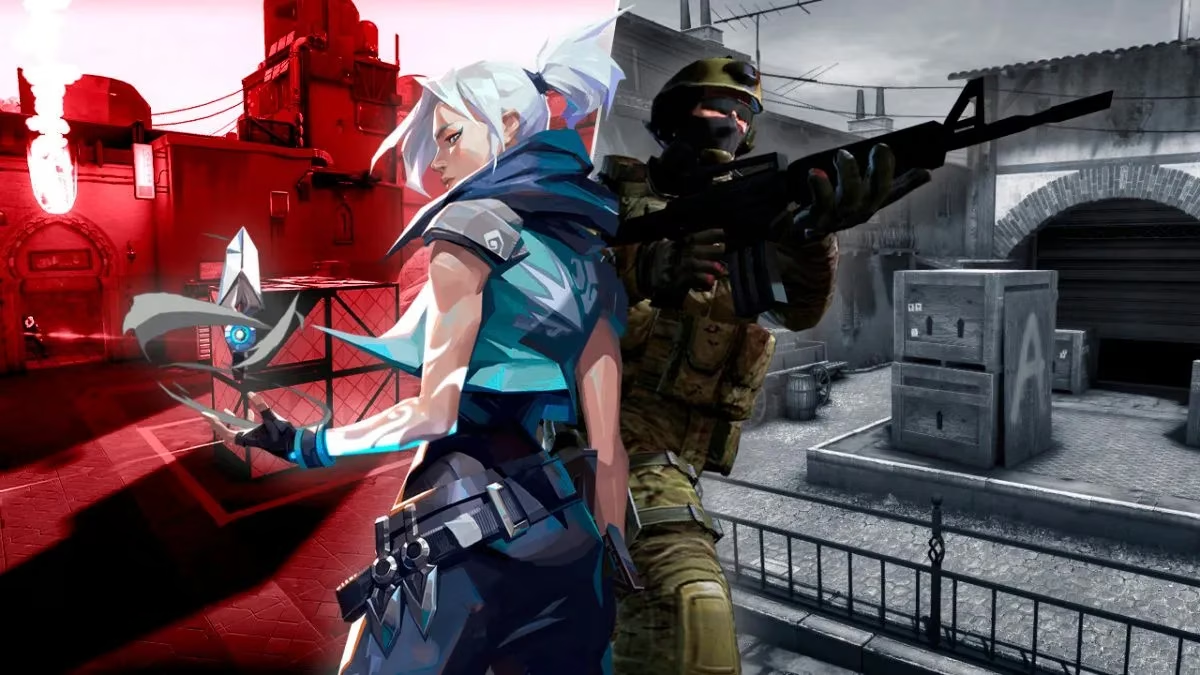
As I dive into the world of tactical shooters in 2026, the conversation still often begins with a comparison between VALORANT and CS:GO. At first glance, the two seem like twins separated at birth, both demanding razor-sharp aim, lightning-fast reflexes, and strategic teamwork in objective-based combat. It's like comparing two masterfully crafted timepieces; from afar, they both tell the time, but the intricate mechanics inside tell vastly different stories. My journey through countless matches in both arenas has taught me that while their foundational DNA shares a helix, the expression of that genetic code diverges into entirely unique experiences.
The Shared Foundation: Precision and Punishment
A brief glimpse at each game would make a casual observer think they were playing the same title. Both games task teams of players with completing an objective—planting or defusing a spike—on maps meticulously designed with tight corridors, multiple attack routes, and punishing choke points. The shooting mechanics feel virtually identical; with practice, a single, well-placed shot can instantly drop an opponent. Attempting to run and gun is a recipe for disaster, as weapon accuracy plummets with movement. Early pro footage from the closed beta confirmed what I quickly learned: VALORANT requires the same methodical, slow movement and constant, cautious peeking around corners. Moving carelessly in either game is as futile as trying to catch smoke with your bare hands—you're left with nothing but frustration.
Arsenal of Familiarity: Guns and Gear
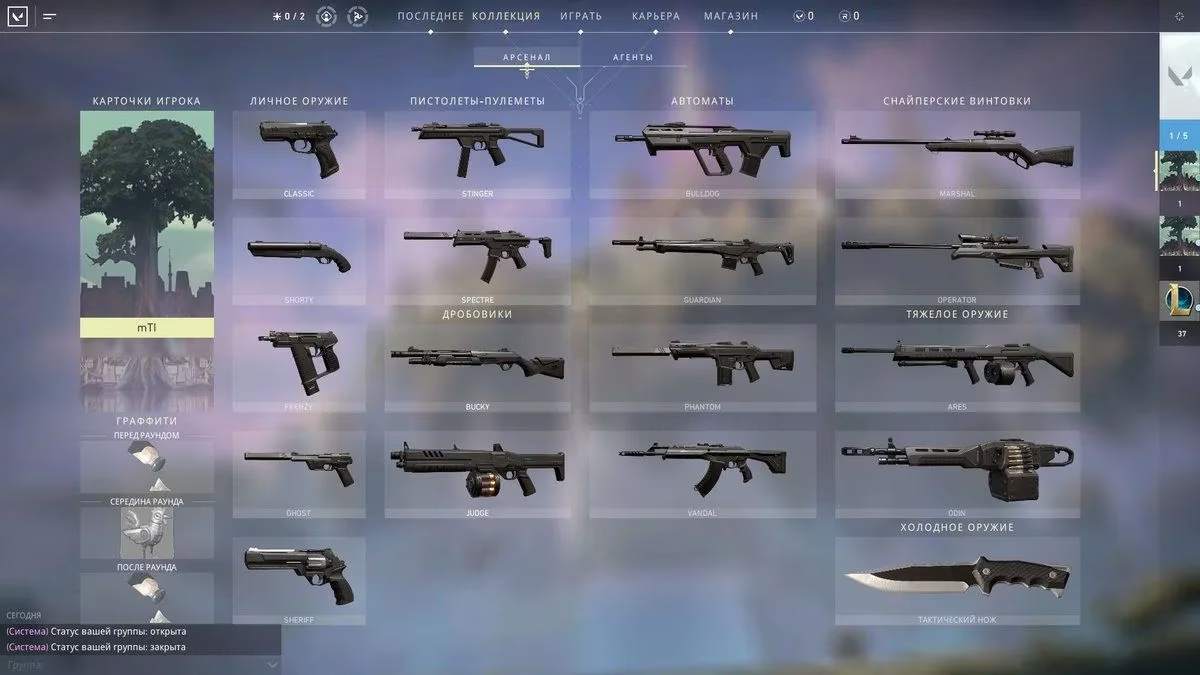
For a veteran of CS:GO's economy rounds, VALORANT's buy menu feels like coming home to a rearranged living room. The furniture is all there, just labeled differently. The weapons, while sporting new names, serve functionally identical roles. The Operator sniper rifle is the spiritual successor to the iconic AWP, demanding respect and map control. The Vandal and Phantom rifles echo the AK-47 and M4, respectively. Even the protective gear follows a familiar logic, with Light and Heavy Shields mirroring the damage mitigation of Kevlar and helmets. The core loop of saving, buying, and managing resources for your team feels deeply ingrained from Counter-Strike's legacy.
The Great Divergence: Abilities and Identity
This is where the skin-deep similarity ends and VALORANT carves its own mythos. While CS:GO equips every player with the same purchasable utility—smokes, flashes, molotovs—VALORANT distributes these tools as innate, character-specific abilities. This is the game's seismic shift.
Each Agent has a unique kit of four abilities:
-
A Signature Ability: Available for free every round.
-
Two Purchasable Abilities: Bought at the start of the round and retained if not used.
-
An Ultimate Ability: Charges through kills, objectives, or orbs scattered on the map.
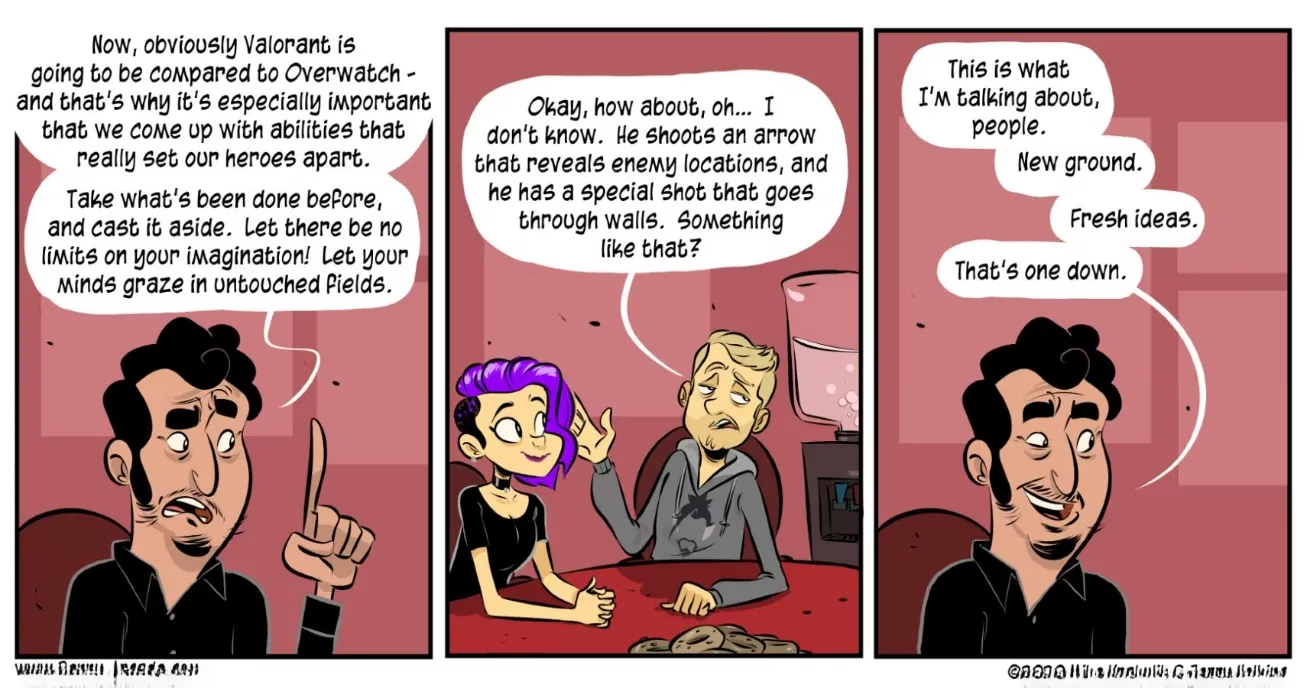
This system transforms the game from pure militaristic simulation to a tactical superhero showdown. I am no longer just a soldier with grenades; I am a controller who can summon a massive wall of celestial ice to block a lane, or a duelist who can dash through dimensions to reposition. The contrast is stark. CS:GO's gameplay is like a high-stakes chess match with standardized pieces. VALORANT, however, is that same chess match if every piece had a unique, magical power, turning the board into a kaleidoscope of strategic possibilities. The immediate visual and gameplay comparison shifts from CS:GO to titles like Overwatch, with characters conjuring fireballs from their hands and painting the battlefield in vibrant, supernatural hues.
The Invisible Framework: Servers and Security
Riot Games made a foundational promise from the start: a competitive experience built on a rock-solid technical foundation. Their deployment of 128-tick servers was a declaration of war against desynchronization. For players like me in major metropolitan areas, this often translates to a sub-35ms ping, making every millisecond duel a test of pure skill, not connection luck. In the competitive scene of 2026, this infrastructure remains a gold standard, ensuring that losing a round feels like a personal or strategic failure, not a network hiccup.
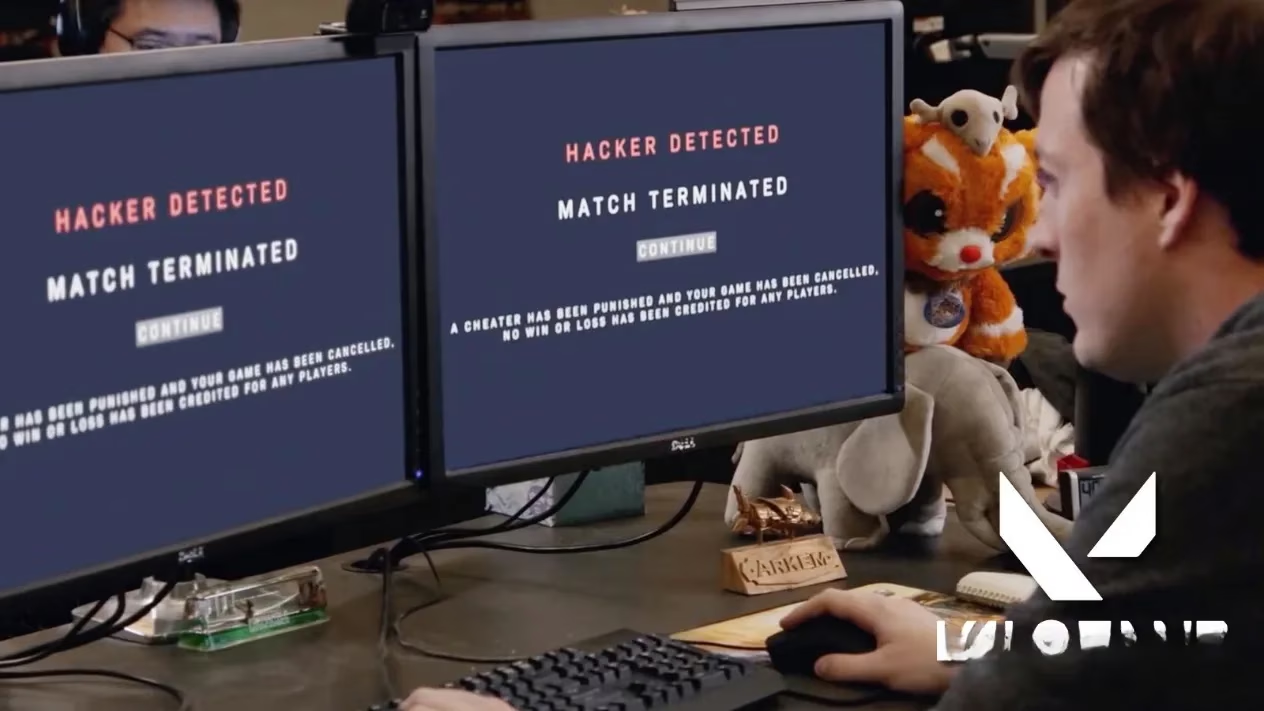
However, this commitment to integrity came with a controversial companion: the Vanguard anti-cheat system. Unlike most anti-cheat software that only activates with the game, Vanguard runs at the kernel level from the moment your PC boots up. Riot's stance has been unwavering—this invasiveness is necessary to root out cheaters at the most fundamental level. While the intent to preserve competitive purity is admirable, the method has always felt like installing a bank vault's security system inside your personal studio apartment. It's supremely effective, but its constant presence has, understandably, made some privacy-conscious players opt out entirely. The debate around this trade-off—maximum security versus system privacy—continues to be a defining, if contentious, aspect of the VALORANT experience.
Conclusion: Two Legacies, One Future
My time in both worlds has led me to a clear conclusion. To call VALORANT a mere clone of CS:GO is to mistake the blueprint for the building. They share the same architectural principles: a foundation of precise gunplay, tactical movement, and objective-focused teamwork. Yet, where CS:GO is a austere, pure symphony of skill and utility, VALORANT is that symphony orchestrated with a full complement of magical instruments. It layers character identity, strategic ability usage, and vibrant personality onto the timeless tactical shooter framework.
In 2026, both games thrive not as rivals, but as pillars of the genre, appealing to different sensibilities within the same community. CS:GO remains the timeless classic, the controlled experiment in perfect mechanics. VALORANT has successfully carved its own future as the dynamic, character-driven evolution, proving that even on a shared foundation, you can build monuments of vastly different design and spirit.
Comments