
It takes years of practice, insane reflexes, and a borderline unhealthy obsession with pixels to reach the top of Counter-Strike. Yet in 2023, one of the world’s elite teams discovered that all that hard work could be undone not by a whiffed AWP shot, but by a teeny-tiny switch buried inside a gaming keyboard. The villain? SnapTap. The victim? HEROIC. And the stage? ESL Pro League Season 20, where a map victory evaporated faster than a smoke grenade in a molotov.
The fiasco unfolded during a tense best-of-three showdown between HEROIC and Ninjas in Pyjamas. Mid-series, ESL officials abruptly announced – both in the broadcast and across their social channels – that HEROIC’s map win on Ancient was being flipped in favor of NIP. The reason? SnapTap, a sneaky input automation mode, had been detected on the keyboard of HEROIC’s rifler René ‘TeSeS’ Madsen. Just like that, a hard-earned round advantage turned into an asterisk, and NIP eventually closed out the match 2-1. Cue the collective jaw-drop of every keyboard enthusiast watching.
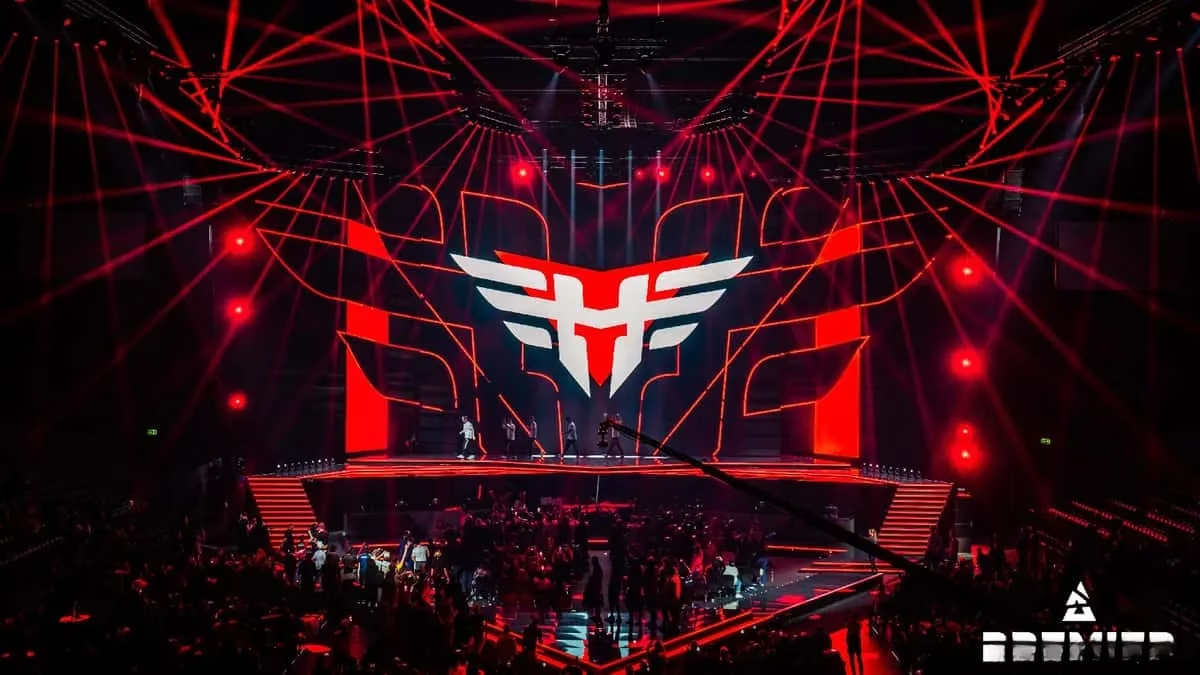
For the uninitiated, SnapTap wasn’t some shady third-party cheat downloaded from a forum that also offers “free V-Bucks.” It was a legitimate feature baked into certain cutting-edge keyboards, notably those from brands like Razer and Wooting, designed to make counter-strafing – the sacred art of tapping opposite directional keys to stop on a dime – as effortless as buttering a slice of toast. Normally, players press A then D with a sub-millisecond pause to halt movement perfectly. SnapTap did the magic automatically: when you press the second key, the first instantly releases, giving you pixel-perfect stops every single time. In a game where one stray bullet decides rounds, this was akin to having a tiny driving instructor inside your keyboard.
Valve, however, was not amused. In August 2023, mere weeks before the HEROIC incident, they classed SnapTap alongside other keyboard macros and aim assistants as illegal automation, banning it from CS2 and all affiliated competitive circuits. Tournament organizers scrambled to follow suit; ESL’s own ban landed on August 29. The problem? Thousands of players had already rewired their muscle memory around these features. The transition period became a game of cat-and-mouse where the mouse sometimes forgot it was supposed to be invisible.
Which brings us back to TeSeS. After the match, the Dane took to social media with a mea culpa that blended agony and embarrassment. “F***ing embarrassing and amateur from me… I turned it off ages ago when it was banned from Valve. I didn’t notice it during the game or anything and obviously didn’t do it on purpose. I let the boys down and I’m devastated about it,” he confessed. His teammate Guy ‘NertZ’ Iluz then revealed the real boogeyman: SnapTap would silently re-enable itself whenever players swapped PCs – a common occurrence at LAN events where setups are shared and profiles aren’t always synced. The feature was basically a Trojan horse wearing a gamer headset.
The fallout sent ripples through the CS2 scene faster than a deagle headshot. This was the very first time a pro team had a map result overturned because of a built-in keyboard feature. Suddenly, every player who owned a fancy keyboard with “rapid trigger” or “snappy keys” was eyeing their peripheral like it might start sending love letters to the tournament admin. The community erupted with a mix of sympathy, schadenfreude, and frantic BIOS menu screenshots. Memes of TeSeS battling an evil keyboard gained more traction than most highlight reels.
From a 2026 vantage point, the HEROIC saga remains the ultimate cautionary tale about the arms race between convenience and competitive integrity. Keyboards have only grown smarter since – today’s models can practically brew coffee while adjusting your crosshair – but the line in the silicon remains brutally clear. Automation macros, whether they help you strafe, jump-throw smokes, or bunnyhop with the grace of a gazelle, are still taboo. Tournament rulebooks now include keyboard inspection protocols that read like TSA guidelines, and players are forced to double-check their drivers with the paranoia of someone hiding a secret Pinterest board.
What can a regular CS2 warrior learn? First, that “hardware assistance” is no longer just about aimbots and wallhacks; it’s the seemingly innocent switch you forgot to flick off. Second, always, always test your gear in a practice round before you enter the server that actually matters. And third, maybe spare a thought for TeSeS, whose fingers moved exactly as his brain intended, only for a silicon stowaway to rewrite the script. The keyboard didn’t get the map ban – the team did.
In the end, HEROIC lost a map, a match, and probably a few hours of sleep. But they gifted the CS2 world an immortal lesson: in the modern era of gaming, the most dangerous cheat might just be the one that came pre-installed.
Comments